
Service
Surround Sound & In-Wall Speaker Installation in Ann Arbor, MI
Surround sound, in-wall and in-ceiling speakers, soundbars and amplifiers, placed for your room and wired out of sight so you hear the sound, not see the gear.
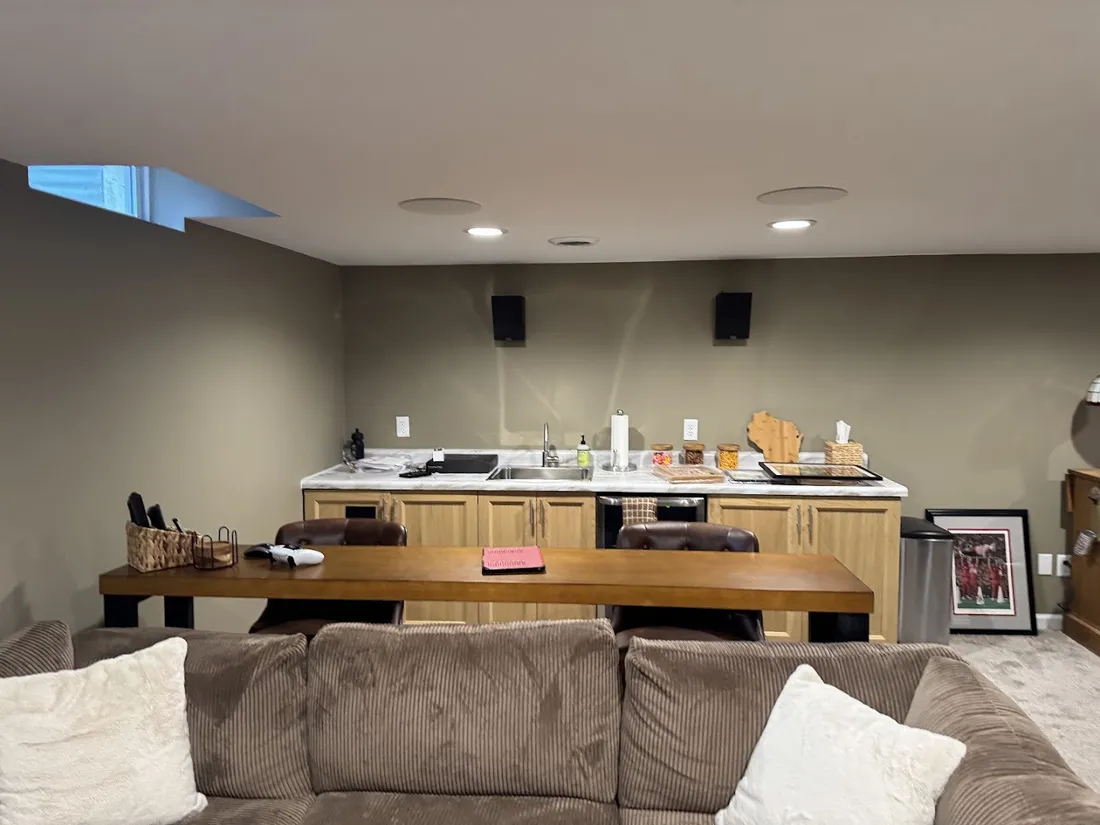
In-Wall & In-Ceiling
Are In-Wall Speakers as Good as Floor-Standing Speakers?
Good in-wall and in-ceiling speakers can sound excellent, and they disappear into the room in a way floor-standing speakers never will. Grilles sit flush with the drywall and many can be painted to match, which is why they're a favorite for living rooms, open floor plans and spaces where the TV hangs over the fireplace.
There are trade-offs worth knowing. The wall cavity becomes part of the speaker, so models designed for in-wall use matter. Deep bass usually comes from a separate subwoofer rather than the wall speakers themselves. And once the openings are cut, the positions are set, which is why layout gets planned before anything goes into the wall. Done right, you get full, clear sound and a room that looks untouched.
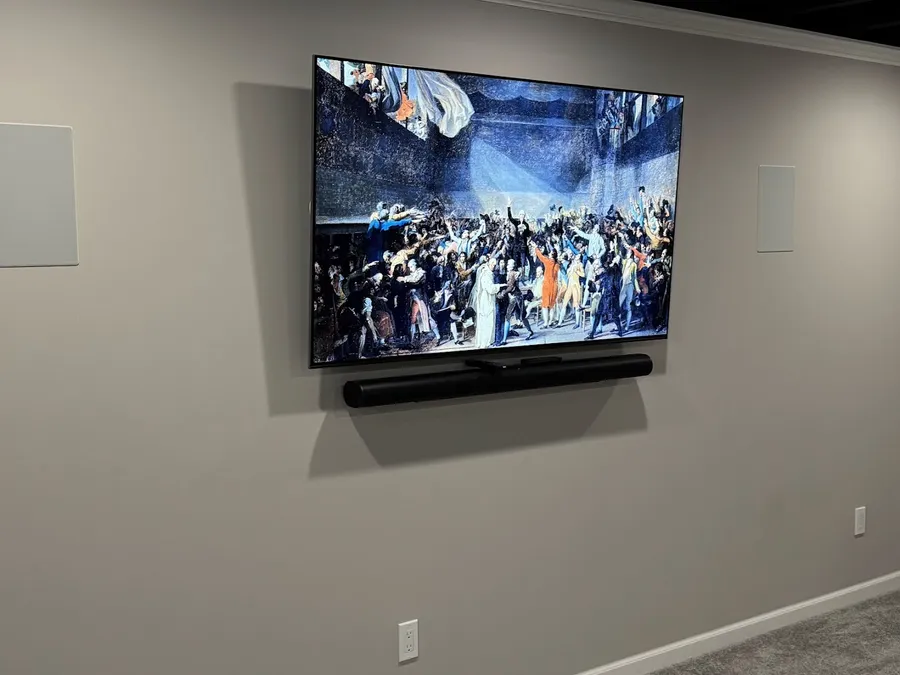
Speaker Layout
How Many Speakers Do You Need for Surround Sound?
Surround systems are described with numbers. The first is the speakers around you, the second is subwoofers, and a third, when there is one, is overhead speakers for Dolby Atmos. Common setups:
- 5.1: left, center and right speakers up front, two surrounds and a subwoofer, a solid fit for most living rooms
- 7.1: adds two rear speakers, helpful when seating sits farther back in the room
- 5.1.2 or 5.1.4: a 5.1 system plus two or four overhead speakers for Atmos
- 7.1.4: the full theater layout for dedicated rooms
More speakers isn't automatically better. The right count depends on the room size, the seating and how much you watch movies compared to TV and music. For full theater planning, see premium home theater design and Atmos integration.
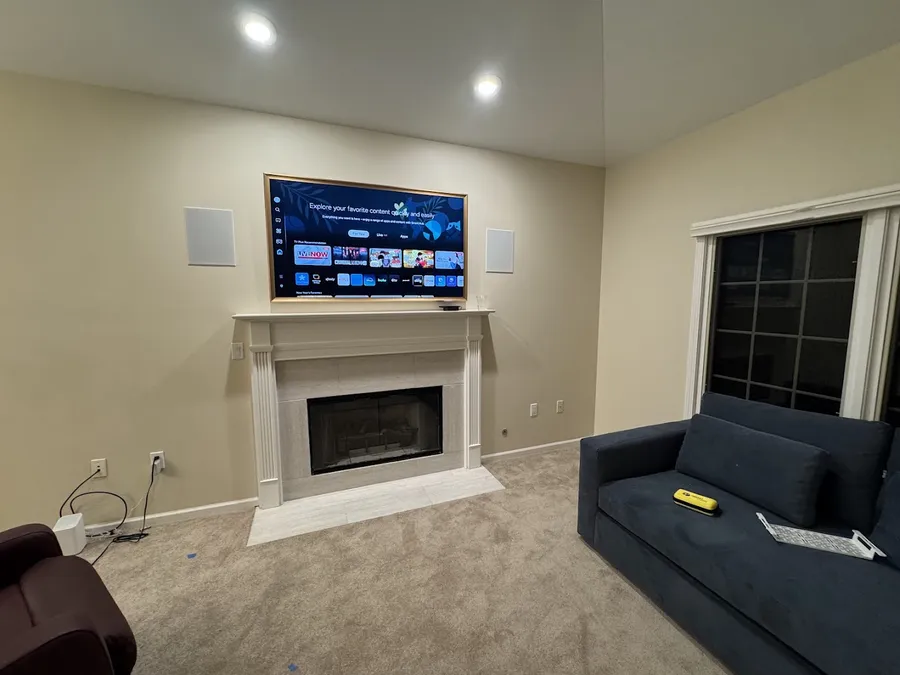
Amps & Receivers
Do In-Wall Speakers Need a Receiver or an Amplifier?
Most in-wall and in-ceiling speakers are passive, which means they need power from a receiver or an amplifier. For a full surround system, that's an AV receiver that handles every channel and switches between your TV, streaming box and game console.
For a simpler setup, like a pair of speakers beside a wall-mounted TV, a compact streaming amplifier such as a Sonos Amp connected to the TV can power the speakers and keep everything controlled from the TV remote or a phone. We've used that combination on an over-the-fireplace Samsung Frame TV install, with the amplifier tucked out of sight and two in-wall speakers on either side of the screen.
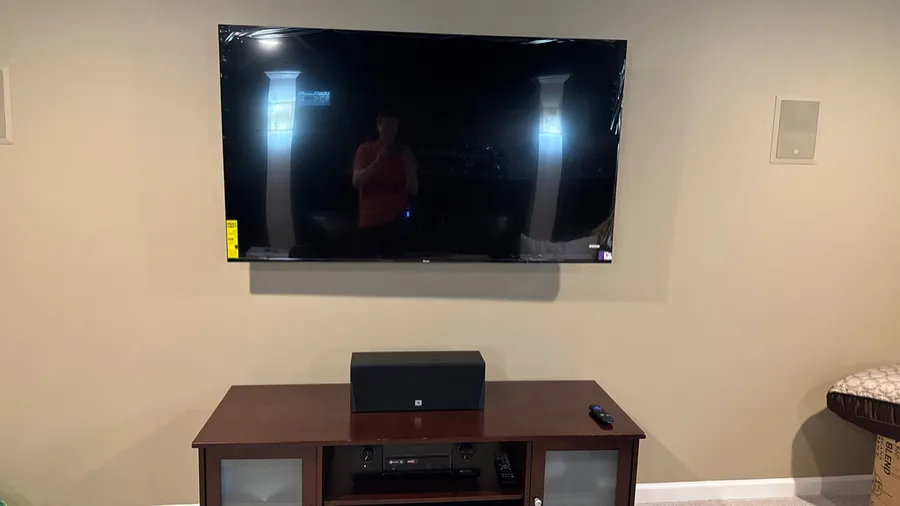
Soundbars
Soundbar or Full Surround Sound System?
A soundbar is the simplest step up from TV speakers: one slim unit under the screen, often with a wireless subwoofer, and some models add wireless rear speakers later. Mounted under a wall-mounted TV with the cable hidden, it looks tidy and works with the TV remote.
A full surround system with separate speakers gives you real separation, so voices stay locked to the screen while effects move around the room. It takes more planning and wiring, but for movie lovers the difference is easy to hear. We help you choose based on the room, how you watch and your budget, and either option can be installed with the wiring out of view.
Clean Wiring
How Is Speaker Wire Run Through Walls and Ceilings?
Speaker wire that runs inside walls should carry an in-wall rating, usually marked CL2 or CL3 on the jacket. From there it's a matter of finding the route: down through stud bays, across through a basement ceiling or over through an attic, ending at each speaker opening and back at the receiver or amplifier.
Older homes and finished basements sometimes need an extra small opening to get past blocking inside the wall. We cut only what the route needs and keep dust under control while we work. The goal is speakers and wiring you never see, in a room that looks just like it did before, only better sounding.
Questions
Surround Sound & In-Wall Speaker Installation FAQ
Can in-ceiling speakers be used for Dolby Atmos?
Yes. In-ceiling speakers are the most common way to add the overhead channels for Atmos, as long as the receiver supports it and the speakers are placed for the seating.
Can in-wall speaker grilles be painted?
Many in-wall and in-ceiling models have paintable grilles, so they can match the wall or ceiling color.
Can my existing speakers be reused?
Often they can, depending on their condition and how well they match the new layout. We'll take a look and let you know what makes sense to keep.
Do you install speakers with a mounted TV?
Yes. It's easiest to wire speakers at the same time as the mount. See TV mounting and wire concealment.
Which areas do you serve for surround sound installation?
We're based in Ann Arbor and install surround sound in nearby communities, including Chelsea, Webster Township, Lodi Township and Saline.
Keep exploring
Other Services You Might Need
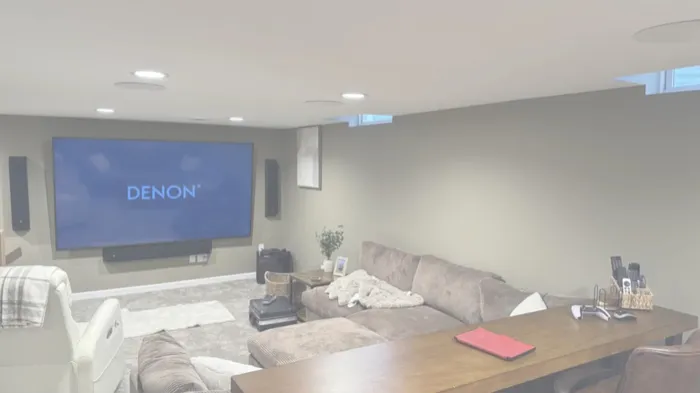
Premium Home Theater Design & Atmos Integration
Custom home theaters with Dolby Atmos sound and a big-screen picture, designed around your room, your seating and the way your family actually watches.
Learn more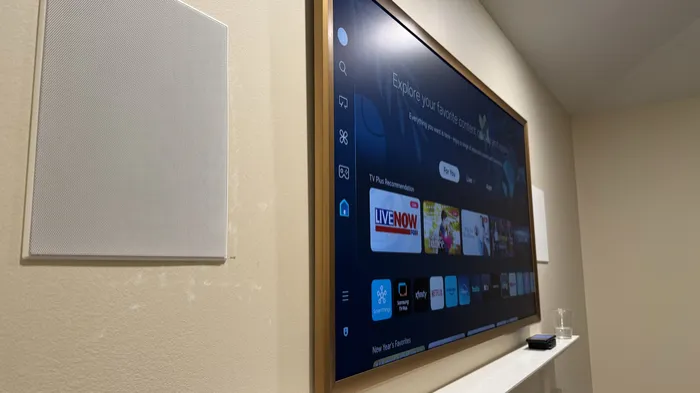
Custom Samsung Frame TV & Art-Mode Integration
Samsung The Frame installed flush on the wall or over the fireplace, with a custom bezel, Art Mode set up and the cables hidden, so it hangs like real art.
Learn more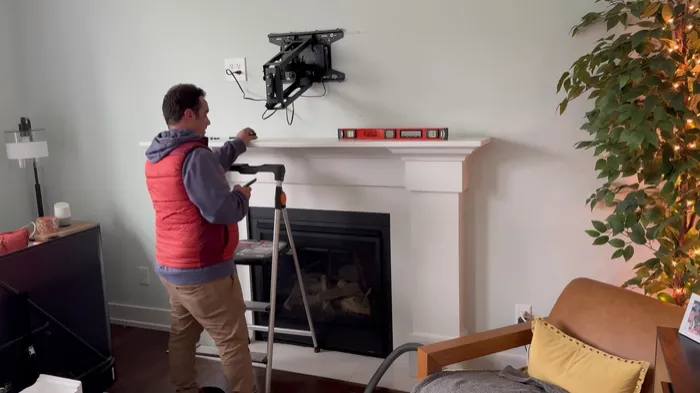
TV Mounting & Wire Concealment
TV mounting on drywall, brick and stone, including over the fireplace and on mantel mounts, with the cables run inside the wall so nothing hangs below the screen.
Learn moreReviews
What Customers Say About Our Work
Reviews from homeowners and businesses we have worked with, straight from our Google Business Profile.

Start your project
Contact Us
Tell us about the room, the screen and the sound you want, and we will get back to you with next steps.
Call Us(586) 960-5776Contact Us
Tell us about your room and what you have in mind, and we will get back to you.